
 Golf Pass
PGA Coach's Guide to Focus, Attentional Control & Concentration
How elite champions command mental bandwidth: master Dr. Robert Nideffer's 4 attentional quadrants, Dr. Joan Vickers' Quiet Eye fixation, and target narrowing under extreme tournament pressure.
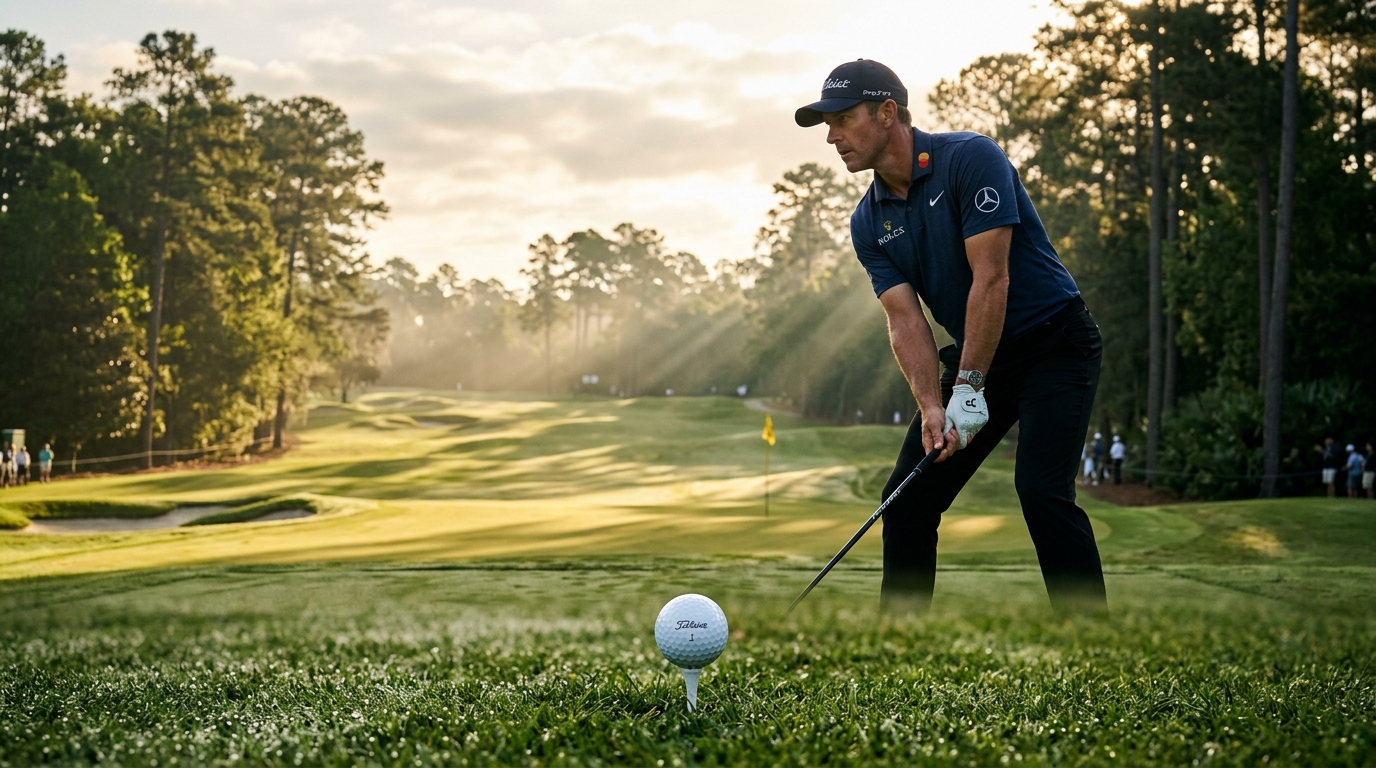
The human brain can only hold one focal point at absolute maximum acuity. If your attentional bandwidth is occupied by water hazards or complex swing mechanics, you have zero processing power left to deliver the clubface to the target.
The Quiet Eye Phenomenon & Attentional Bandwidth
Groundbreaking eye-tracking research conducted by Dr. Joan Vickers revealed the "Quiet Eye" phenomenon: elite tour players maintain a steady, unmoving gaze upon a single spot on the golf ball for 2.0 to 3.2 seconds prior to takeaway, and hold their visual gaze on the turf for 200–300 milliseconds after impact.
"Amateur golfers have darting, restless eyes over the ball—looking back and forth between ball, bunker, and clubface. The tour professional locks their eye into an unwavering trance. A still eye organizes the motor cortex for a repeatable strike."
Furthermore, attentional focus must be dynamic. Top players don't keep maximum focus for 4.5 hours straight—that induces severe mental fatigue by the 14th hole. Instead, they operate like a camera lens: zooming in tightly for 20 seconds during their shot, then relaxing broadly into casual conversation while walking.
The 2.5-Second Quiet Eye
Lock gaze onto a single dimple on the back of the ball before takeaway. Stable vision directly stabilizes body balance.
Aim Small, Miss Small
Never aim at a 50-yard fairway. Pick a distant treetop branch or antenna. Subconscious motor grouping tightens automatically.
Pacing the Lens (Mental Stamina)
Turn intense focus ON only when stepping into the Think Box. Turn it OFF while strolling down the fairway.
Attentional Control & Target Narrowing Console
Test and train your attentional flexibility: explore the 4 attentional quadrants, compare dispersion ellipses with the target narrowing slider, and calibrate your autonomic nervous system with the live box breathing timer:
Attentional Control & Target Narrowing Console
Toggle between the 4 attentional quadrants, explore the "Aim Small, Miss Small" visualizer, and practice 4-4-4-4 box breathing.
center_focus_strongNarrow External (Target Lock)
Focusing exclusively on a razor-sharp external focal point: a single discolored leaf behind the green, a specific dimple on the ball, or an intermediate blade of grass.
Neuroscience confirms that aiming at a microscopic target triggers tighter subconscious motor grouping than aiming at a general fairway expanse:
Elite athletes use 4-4-4-4 Box Breathing between shots to lower heart rate by 8–14 beats per minute and silence adrenaline spikes before stepping into the Play Box:
Focus Habits of Major Champions
Tiger Woods: The Attentional Cocoon
Tiger described his tournament focus as an impenetrable bubble: camera shutters, gallery noise, and scoreboards faded into complete silence once he crossed the decision line.
Jack Nicklaus: Intermediate Alignment
Nicklaus found it impossible to square a clubface to a target 230 yards away. Instead, he picked an old divot or discolored leaf just 2 feet ahead on his target line and focused 100% on rolling the ball over it.
Ben Hogan: 18 Distinct Holes
Hogan never played 18 holes at once; he played 70 separate, self-contained shots. He refused to calculate his total score until his scorecard was handed in at the scoring tent.
3 Drills to Build Unbreakable Concentration
The Dimple Lock Quiet Eye Drill
Tee up the ball with a black Sharpie dot facing straight back towards your clubface. When addressing the ball, hold your gaze locked entirely on that black dot for a slow count of 3 before starting your backswing.
The Distraction Inoculation Drill
Practice hitting balls while a friend intentionally jingles coins in their pocket, drops a club, or speaks nearby during your backswing. Force your visual focus onto your target until external noises disappear.
The Fairway Micro-Point Challenge
On the tee box, never aim down the center. Pick the smallest visible object on the horizon—a specific fence post, electric pole insulator, or pine branch tip. Grade yourself on matching your launch apex to that point.
Final Chapter: Confidence & Mental Toughness
Learn how tour pros reprogram destructive self-talk, conquer first-tee jitters, and build indestructible swagger.